Solar Radiation Resource Assessment(SRRA) Facility at NISE
Solar Radiation Resource Assessment (SRRA) is a mission mode program launched by MNRE in 2010, setting the world’s largest network of ground solar radiation measurement stations at various locations in the country. The program aims to fill the void for the availability of investor grade quality solar radiation data in the country crucial for designing and implementation of solar power projects. The SRRA Program was implemented in two phases where 51 SRRA stations were set up in phase-1 by October, 2011, in 11 States 1 Union Territory and in the second phase, 60 SRRA stations (in 28 states and 3 UTs) were established. In addition, 4 Advanced Measurement Stations (AMS) were added by June 2014 at four typical locations in the country for the characterization of incoming solar radiation.
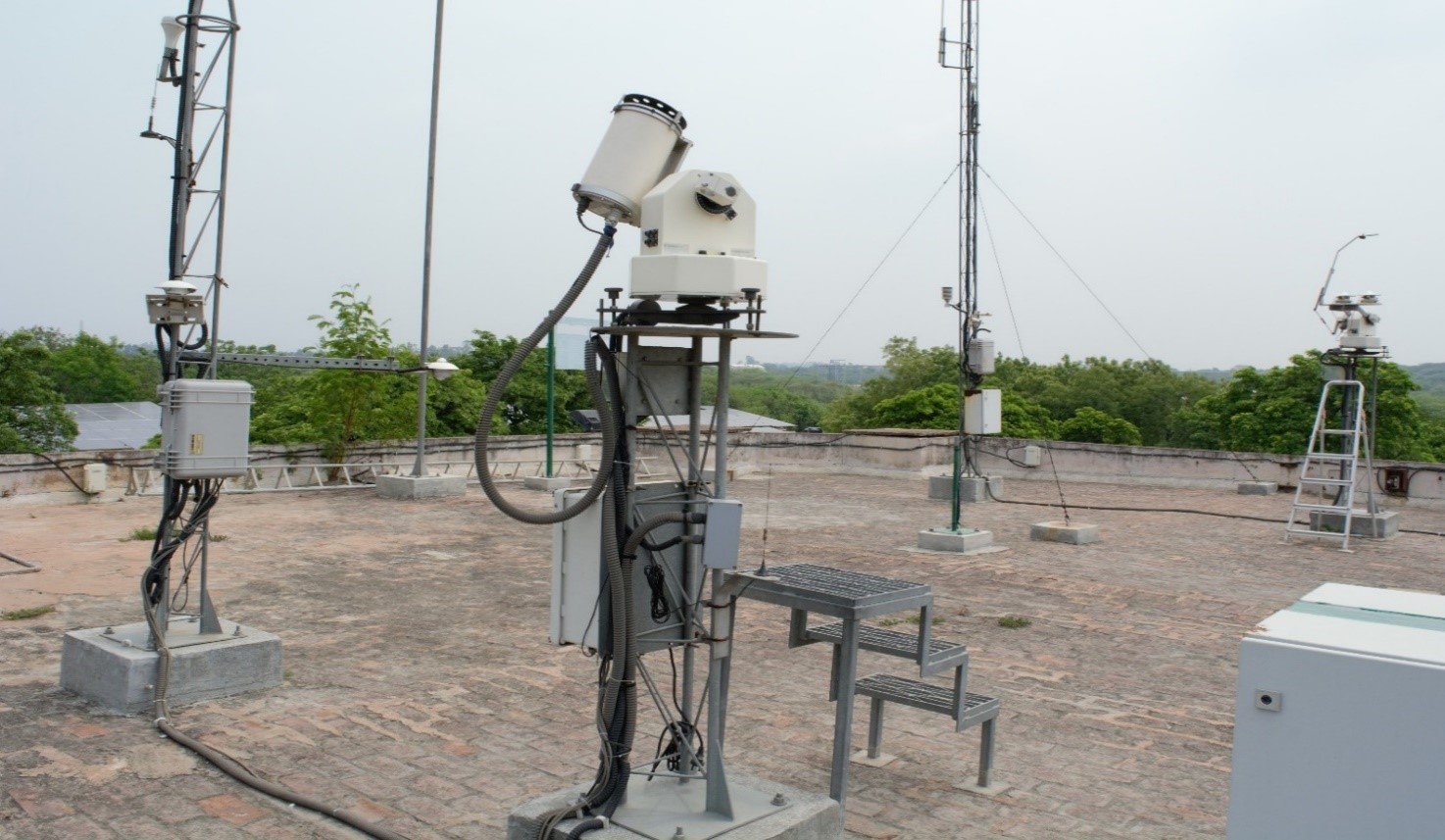
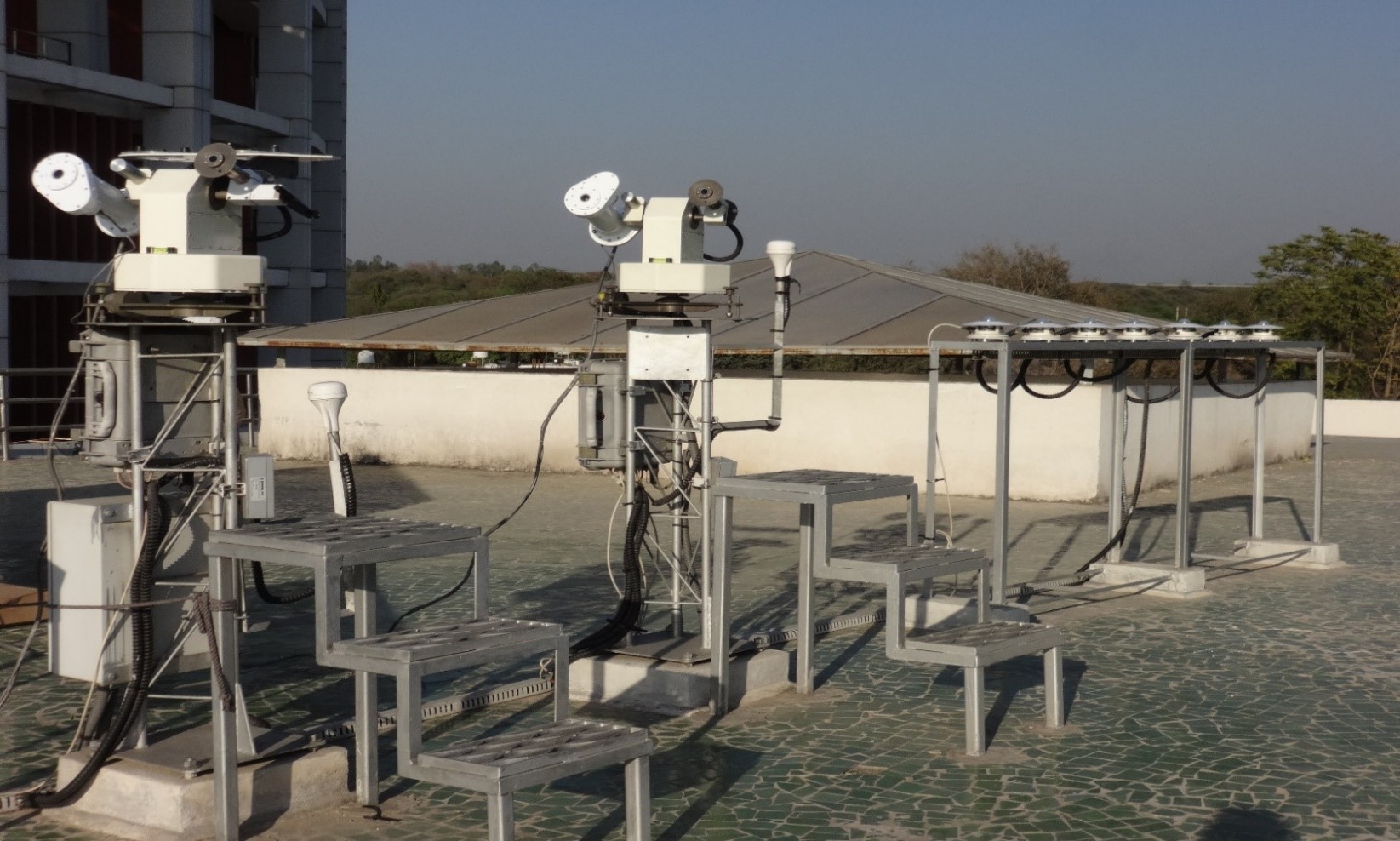
NISE has one SRRA station (Phase-1) and AMS station as a part of its Solar Radiation Resource Assessment facility. The facility is providing the quality solar radiation data for solar resource assessment activities and performance monitoring, evaluation of various solar energy technologies at NISE. The existing SRRA facility is listed for consideration to be a member of Baseline Solar Radiation Network (BSRN), a global radiation network established under World Climate Research Program (WCRP) (BSRN Candidate. Station no: 56)
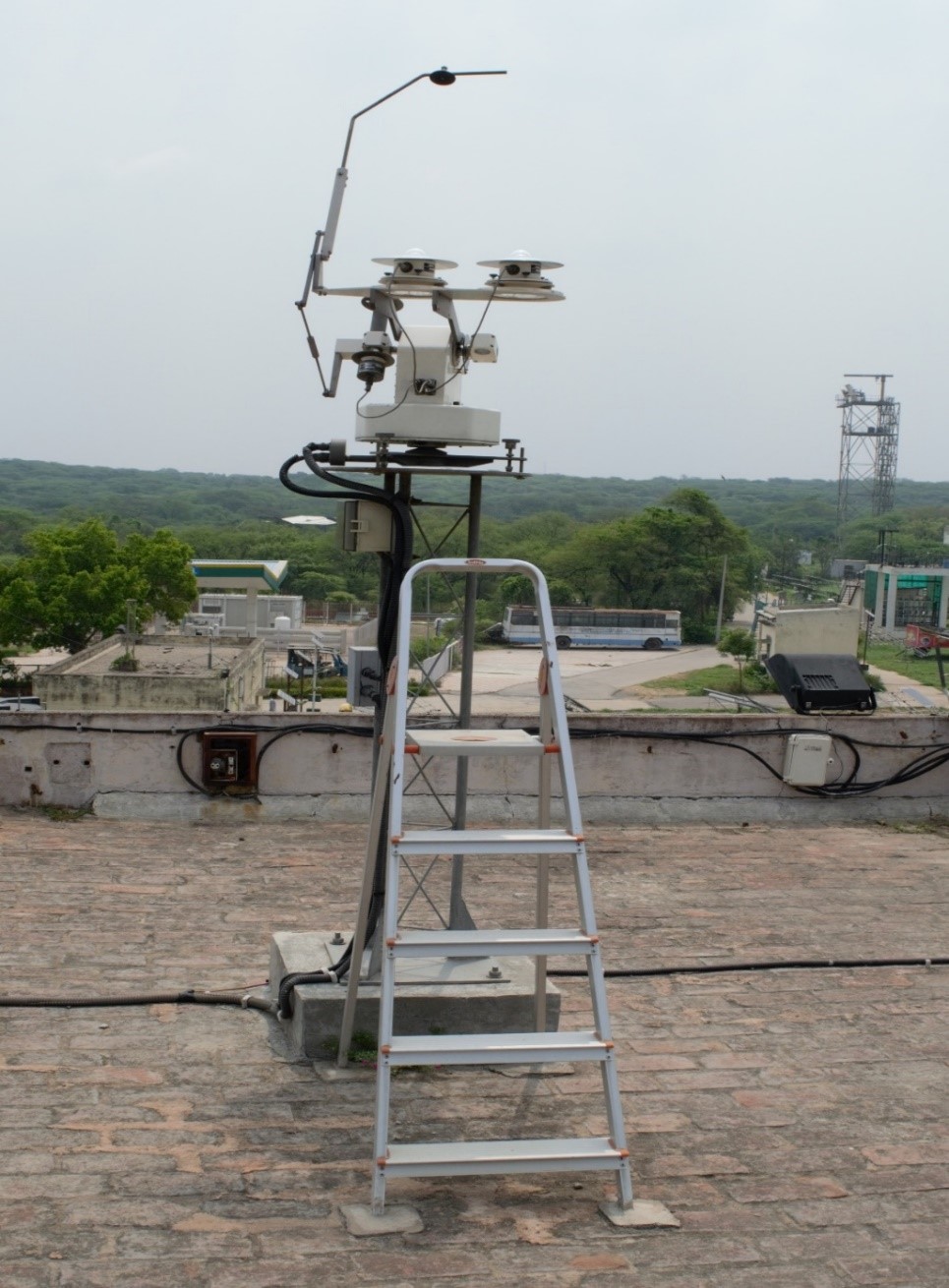 GHI, DHI and DNI Measurement setup GHI, DHI and DNI Measurement setup |
The SRRA facility at NISE consist of WMO high quality state of art sensors measuring the high-quality solar radiation and meteorological data with various other sophisticated parameter characterizing the quality of incoming solar radiation. The entire facility has two parts, with one measuring the basic solar radiation parameters like Global horizontal Irradiance (GHI), Diffuse Horizontal Irradiance (DHI), Direct Normal Irradiance by WMO high quality or ISO Secondary standard sensor along with Meteorological parameters like Ambient temperature, Relative humidity, Wind speed, Wind Direction by NIST traceable sensor. |
|
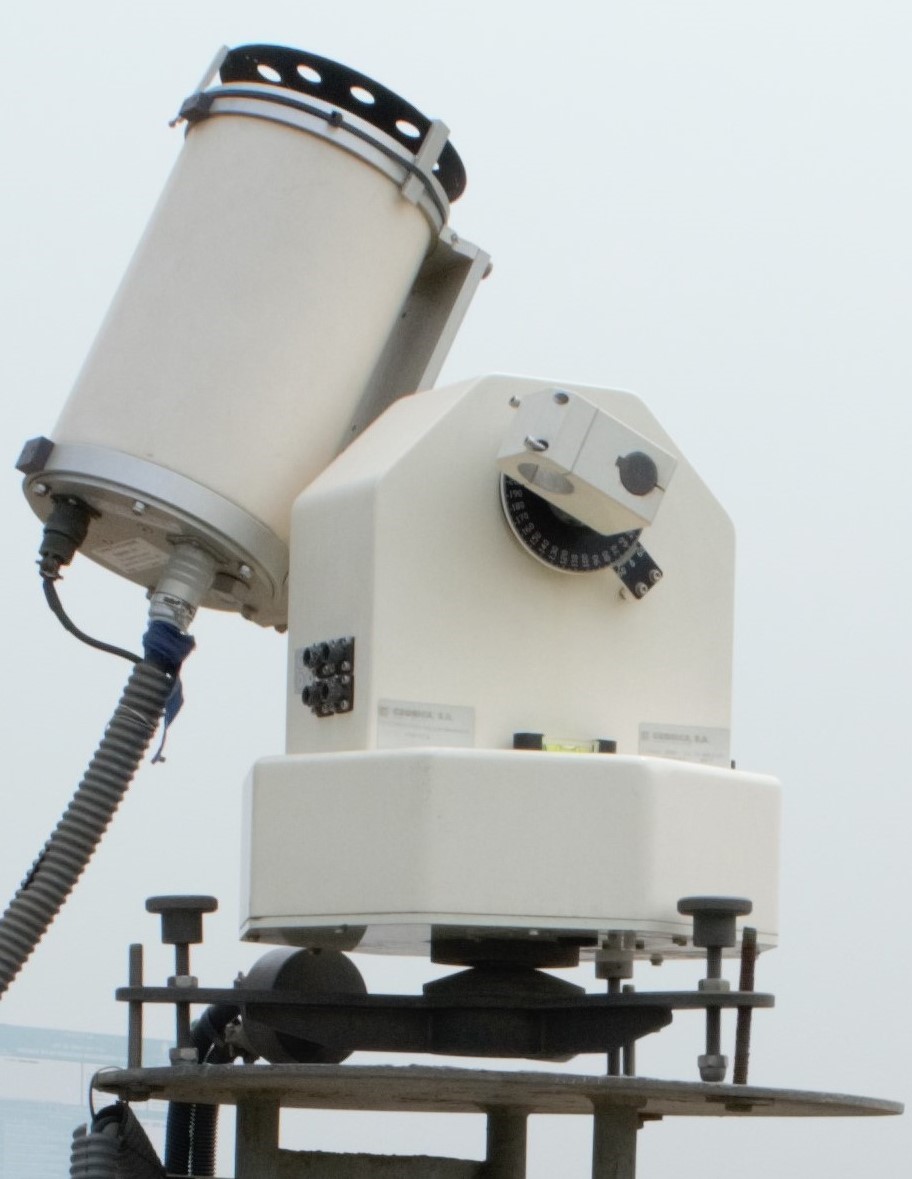
Advanced Measurement Facility (AMS): The other part of the facility termed as advanced measurement facility, consisted of sophisticated sensors measuring parameters characterizing the quality of incoming solar radiation. The sensors which are part of the facility are Sun photometer, Albedometer, Pyrgeometer, Visibility sensor and Silicon Photodiode sensor. The table following indicate the significance of these sensors |
|
| Sr.No. | Sensor | Parameter Measured | Application |
| 1 | Sun photometer | Spectral DNI at 10 discrete wavelengths | Finding the Aerosol Optical Depth (AOD), Water Vapor Column, Ozone Column |
| 2 | Albedometer | Albedo or Ground reflected radiation | For finding the quantity of ground reflected radiation at different conditions |
| 3 | Pyrgeometer | Longwave or Infrared Radiation | Measuring downward atmospheric Longwave radiation |
| 4 | Visibility sensor | Atmospheric visibility | Measure visibility due to scattering of light by suspended particle in atmosphere |
| 5 | Silicon photodiode | Global solar radiation in visible and near infrared portion of the spectrum | Performance evaluation of PV technology |
Remote Monitoring of the stations.
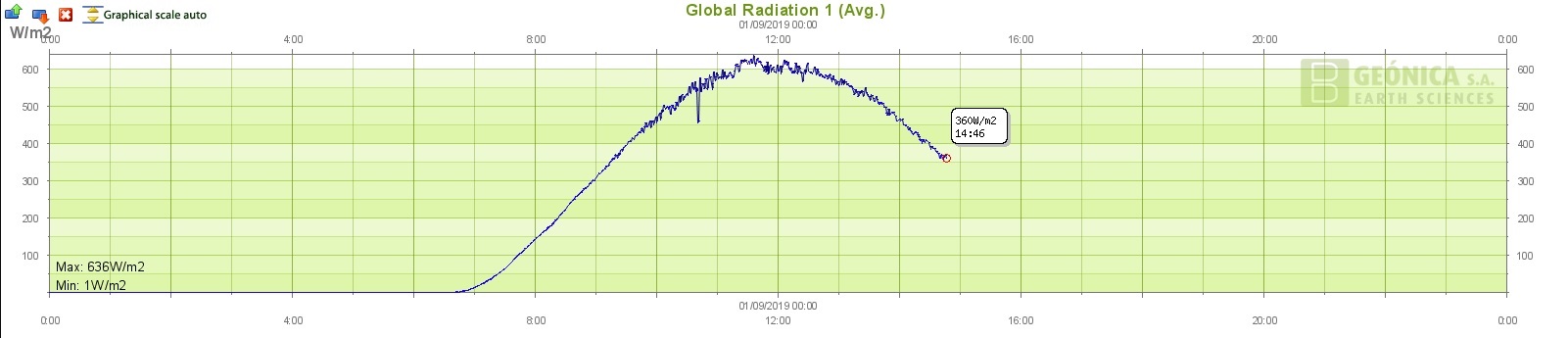
Data from station for all parameters (solar and meteorological) is monitored on real time basis by web interface. The remote monitoring in addition to providing data accessibility remotely prevents data loss by scheduling preventive maintenance at the earliest.
Solar Radiation Calibration Laboratory (SRCL), NISE
To achieve the quality data generation under SRRA program, a calibration laboratory for calibration of solar radiometers of SRRA network was established at NISE on the MNRE directive. The Solar Radiation Calibration Laboratory (SRCL) at NISE is assisting the SRRA program of MNRE for quality data generation by calibration of solar radiometers of SRRA stations mostly from Northern, North -Eastern region of the country.
SRCL is an outdoor laboratory established at Surya Bhavan NISE has state of art infrastructure and highest quality reference standard sensors such as Absolute Cavity Radiometer (Primary Standard -Eppley AWX-AHF) for achieving precise radiometric calibration. Established following the WMO guidelines, SRCL observes International Standard (ISO9847, ISO9059, ISO9846) for Calibration thereby establishing the calibration traceability and thus solar radiation measurement to World Radiometric Reference (WRR) scale. In addition, the facility is also catering the calibration need of private organizations in the country under its commercial mode program.
Calibration of Radiometers under commercial mode: The commercial calibration mode program was initiated in 2017 by NISE to extend the calibration services to any Private organization and Institute in the country at applicable calibration charges. Additional details regarding the calibration of solar radiometer under commercial mode can be obtained from the customer service cell NISE.